Catalytic Converter Cages, Locks and Alarms: What Actually Works.
Cages, cables, locks, alarms, etching and shields all claim to stop converter theft. What each one physically does, where each fails, and which combination is worth paying for.
If a vehicle-specific plate exists for your vehicle, buy that. Everything else is either a supplement to a plate or a substitute for one.
A cage is the reasonable second choice where no plate exists, though it is open by design and a grinder cuts through bar stock. Cables are cut by the same saw. Alarms only help where someone is present to respond, which rules out most public parking.
Etching does not prevent the theft, but it helps recovery and it is worth doing when it is free.
Every anti-theft option for a catalytic converter does one of three things: block the cut, slow the cut, or help afterwards. Most of the confusion in this category comes from products in the third group being marketed as though they were in the first.
This page sorts the options by what they physically do. If you want the definitions first — shield versus guard versus cover — start with what a cat shield is. This one is about which to actually buy.
Jump to: The three categories · Cages · Cables and locks · Alarms and tilt sensors · Etching and marking · Plates · Compare · What to actually buy · FAQ
The three categories
A converter is stolen by cutting the exhaust pipe on both sides of it and lifting the part out. The whole job is usually under two minutes with a cordless reciprocating saw. So every product on the market is really answering one question: what does it do to those two minutes?
- Block the cut. Put solid material between the blade and the pipe. Only a plate does this properly.
- Slow the cut. Add material or awkwardness that has to be dealt with first. Cages and cables live here.
- Help afterwards. Do nothing to the theft itself, but improve the odds of identification, recovery or a claim. Etching and marking live here. Alarms sit awkwardly between this and the second group.
All three have a place. The mistake is buying from the third group while believing you bought from the first.
Cages
A cat cage is a lattice of steel bar or rebar built around the converter, either clamped or welded to the exhaust and surrounding structure. It is the most common shop-fitted option because it can be fabricated for almost any vehicle without needing a plate engineered for that specific underbody.
What it does well: it genuinely adds time. A thief has to cut or spread bars before reaching the pipe, and doing that in an awkward position under a vehicle is slow and noisy. Against an opportunist working fast, that is often enough.
Where it fails: a cage is open by design. The converter stays reachable — you have made a two-minute job into a ten-minute one, not an impossible one. An angle grinder goes through bar stock quickly. Welded cages also complicate legitimate exhaust service later, and a badly built one can transmit vibration or rattle against the pipe.
Buy one if no vehicle-specific plate exists for what you drive. That is the honest use case, and it is a real one.
Cables and locks
These are steel cable loops or lock assemblies threaded around the converter and anchored to the frame. They are the cheapest option in the category, often under a hundred dollars fitted.
What it does well: almost nothing to the cut itself, but it does mean the part cannot simply be lifted away the instant the pipe is severed. It also signals, visibly, that the vehicle is not the easiest one in the lot — which has some deterrent value on its own.
Where it fails: aircraft cable is cut by the same tool already being used on the exhaust. The saw is out and running. This is the option that is most often sold as protection and delivers the least of it.
Buy one if the budget is genuinely the constraint and the alternative is nothing. Do not buy one believing it is equivalent to a shield.
Alarms and tilt sensors
These detect vibration, tilt, or the specific signature of a saw, and trigger the vehicle alarm or push a phone notification.
What it does well: it is the only category that can interrupt a theft in progress. If you are nearby — home driveway, jobsite, campground — a phone alert is genuinely useful, and a siren going off mid-cut does end most attempts.
Where it fails: it depends entirely on someone hearing it and caring. In a public parking lot, an alarm is background noise. False triggers from other vehicles, weather and car washes are common, and an alarm you have learned to ignore protects nothing. There is also a wiring and battery-draw consideration on vehicles that sit for long periods.
Buy one if the vehicle is usually parked somewhere you or someone else would actually respond. Layered on top of a plate, it is a reasonable second line.
Etching, marking and paint
The converter is etched with the VIN or a serial, or painted high-temperature bright orange, so a scrapyard or officer can identify it.
What it does well: it makes the part traceable and harder to sell to a legitimate buyer, and some programs run free clinics. Over time and across a population, that matters — reducing the resale value of stolen converters is part of why national theft numbers have fallen from their peak.
Where it fails: it does not protect your vehicle from this theft. A thief under your truck at night is not reading the pipe. Treat it as a public-good measure and a recovery aid, not a deterrent.
Buy it if it is free or nearly so. It is worth doing. It is not worth doing instead of something physical.
Plates and shields
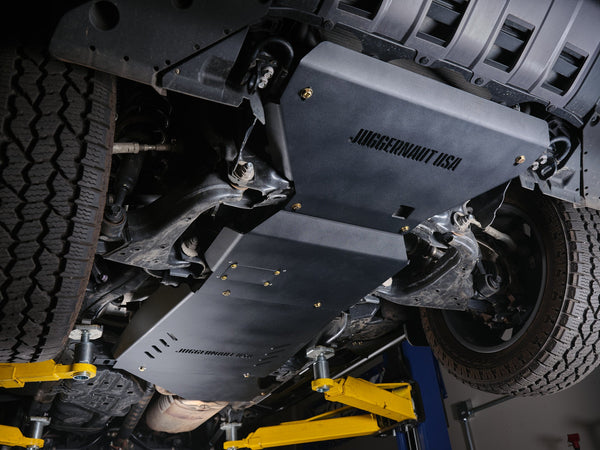
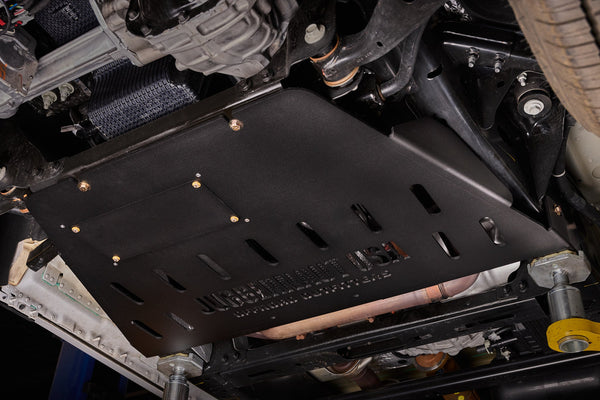
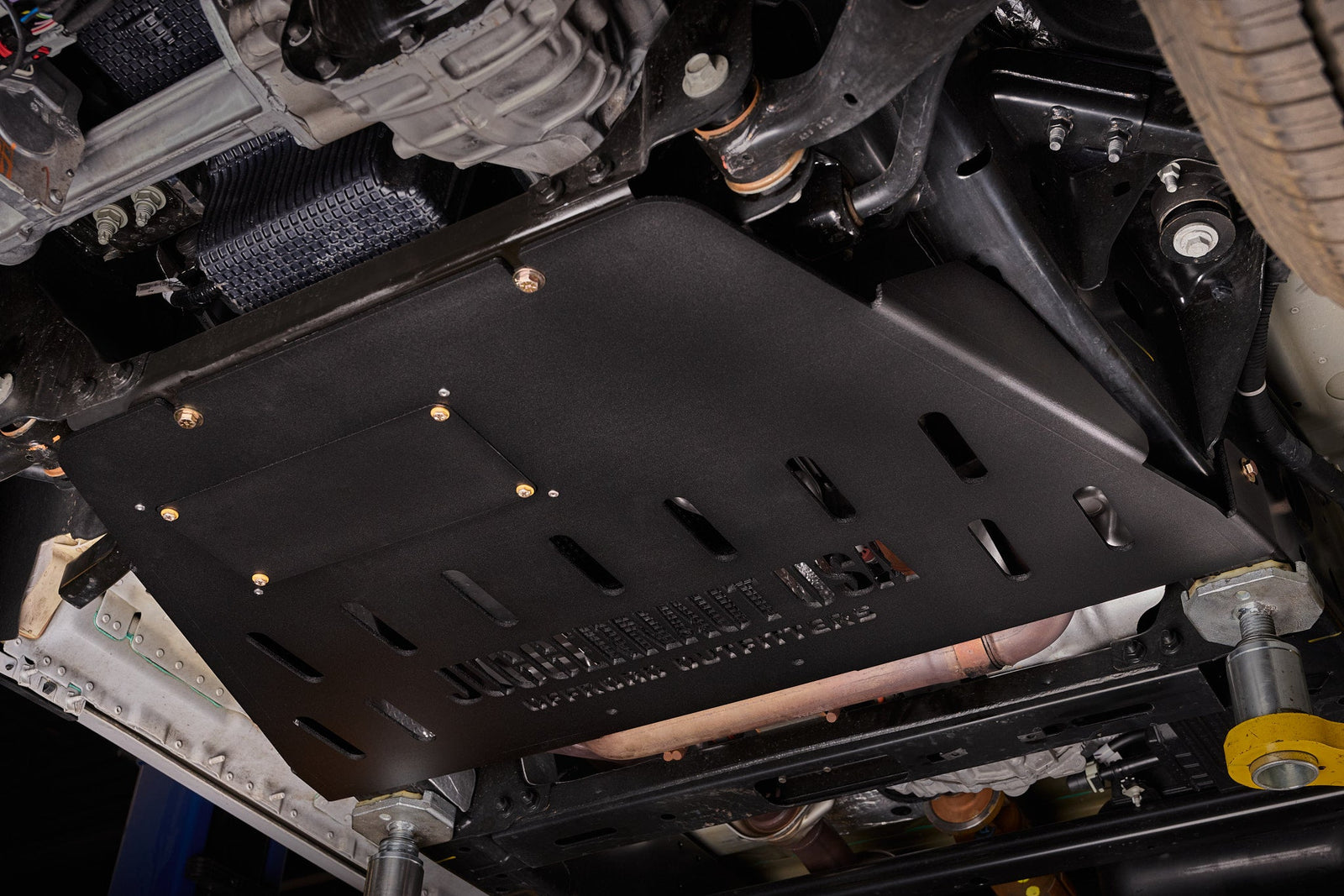
A solid plate bolted over the converter and the pipe on both sides of it. This is the only option in the category that puts material where the blade needs to go.

What it does well: it blocks rather than delays. A properly covered converter cannot be cut out without first removing or defeating the plate, which means dealing with the fasteners or cutting through the plate itself — both slow, loud and visible.
Where it fails: coverage is everything and it varies wildly between products. A plate that covers the body of the converter but leaves the pipe exposed on both ends has not blocked the cut, it has moved it a few inches. Fastener choice matters just as much — four ordinary bolts and a socket set is not a barrier. And universal plates clamped on without regard to the underbody can hang lower than what they protect.
Worth knowing too: a lot of what is sold as converter protection is sheet rather than plate, and because stiffness scales with the square of thickness, that difference is bigger than it sounds. The cat shield explainer covers how to check.
Buy one if a vehicle-specific plate exists for what you drive. That is the whole test.
Side by side
| Option | What it does | Relative cost | Stops the cut? | Main weakness |
|---|---|---|---|---|
| Plate / shield | Blocks access | $$$ | Yes, if coverage is right | Only exists for some vehicles |
| Cage | Slows the cut | $$ | No — delays it | Open by design; grinder gets through |
| Cable / lock | Slows removal | $ | No | Cut by the tool already in use |
| Alarm / tilt sensor | Interrupts, if heard | $$ | No | Needs someone to respond |
| Etching / marking | Aids recovery | Free–$ | No | Zero effect on the theft itself |
| Parking habits | Reduces selection | Free | No | Not always in your control |
What to actually buy
If a vehicle-specific plate exists for your vehicle, buy that first. Everything else in this list is a supplement to it or a substitute for it, and only one of those is a good reason to buy. We cut converter shields for Ford, Chevrolet and GMC trucks, Ram ProMaster, Mercedes Sprinter and Nissan NV — if yours is on that list, the decision is made.
If no plate exists for your vehicle, a cage is the honest second choice. Not equivalent, but genuinely obstructive, and it can be built for anything.
Add an alarm if the vehicle parks somewhere a response would happen — a driveway, a yard, a jobsite. Skip it if it lives in long-term public parking, where nobody reacts.
Get it etched if a free clinic is available. Costs nothing, helps if the worst happens.
Park with intent. Free, and it works: lit areas, garages where possible, and backing a tall vehicle against a wall or curb so there is less room to get underneath. Height is the single biggest risk factor — a thief needs to get under the vehicle, and on a truck or a van they can do that without a jack.
For which vehicles are targeted most and what fits each one, see the converter protection guide. And if you are weighing whether to fit a plate yourself, what the install actually involves covers it.
FAQ
Is a catalytic converter cage as good as a shield?
No. A cage is open by design and slows the cut rather than blocking it — a grinder gets through bar stock. It is a good option when no vehicle-specific plate exists for your vehicle, which is its real use case.
Do catalytic converter locks and cables work?
Barely. The cable is cut by the same saw already being used on the exhaust. It has some deterrent value as a visible signal, but it is the weakest physical option on the market.
Are converter alarms worth it?
Only if the vehicle usually parks somewhere you or someone else would actually respond to it. In public parking, alarms are ignored. As a second layer on top of a plate, in a driveway or yard, they are reasonable.
Does etching my VIN on the converter stop theft?
No. It makes the part traceable and harder to sell on, which helps recovery and helps the wider problem, but it does nothing to the theft itself. Worth doing if it is free — not worth doing instead of something physical.
Can I fit a cage and a plate?
You can, but there is little point. If a plate covers the converter and the pipe on both sides, the cage is adding awkwardness around something already blocked. Spend the money on coverage and fasteners instead.
Will any of this void my warranty?
Bolt-on protection that uses existing mounting points and does not modify the exhaust generally will not. Welded cages are a different conversation because they attach to emissions hardware — worth checking before it goes on.
What actually reduced converter theft nationally?
A combination: precious-metal prices coming down from their 2021–22 peak, scrap-yard purchase laws tightening in many states, and physical protection becoming common. The trend is down substantially from the peak, which is genuinely good news and does not make an unprotected truck a safe bet.
Fitment varies by model year, wheelbase, and roof height. Always confirm your exact configuration before ordering — we check fitment free with every quote.
A bolt-on 1/4-inch aluminum shield covers the converter — no cages, locks, or alarms to reset.