33s vs 35s on a 3rd-Gen Tacoma: What Each Size Actually Takes (2016–2023).
What it really takes to run 33s or 35s on a 2016-2023 Tacoma — and why cab mount work is decided by wheel offset and how hard you wheel it, not just by tire size. Chop vs relocation, honestly.
A stock 3rd-gen Tacoma is a 275/70R17 truck.
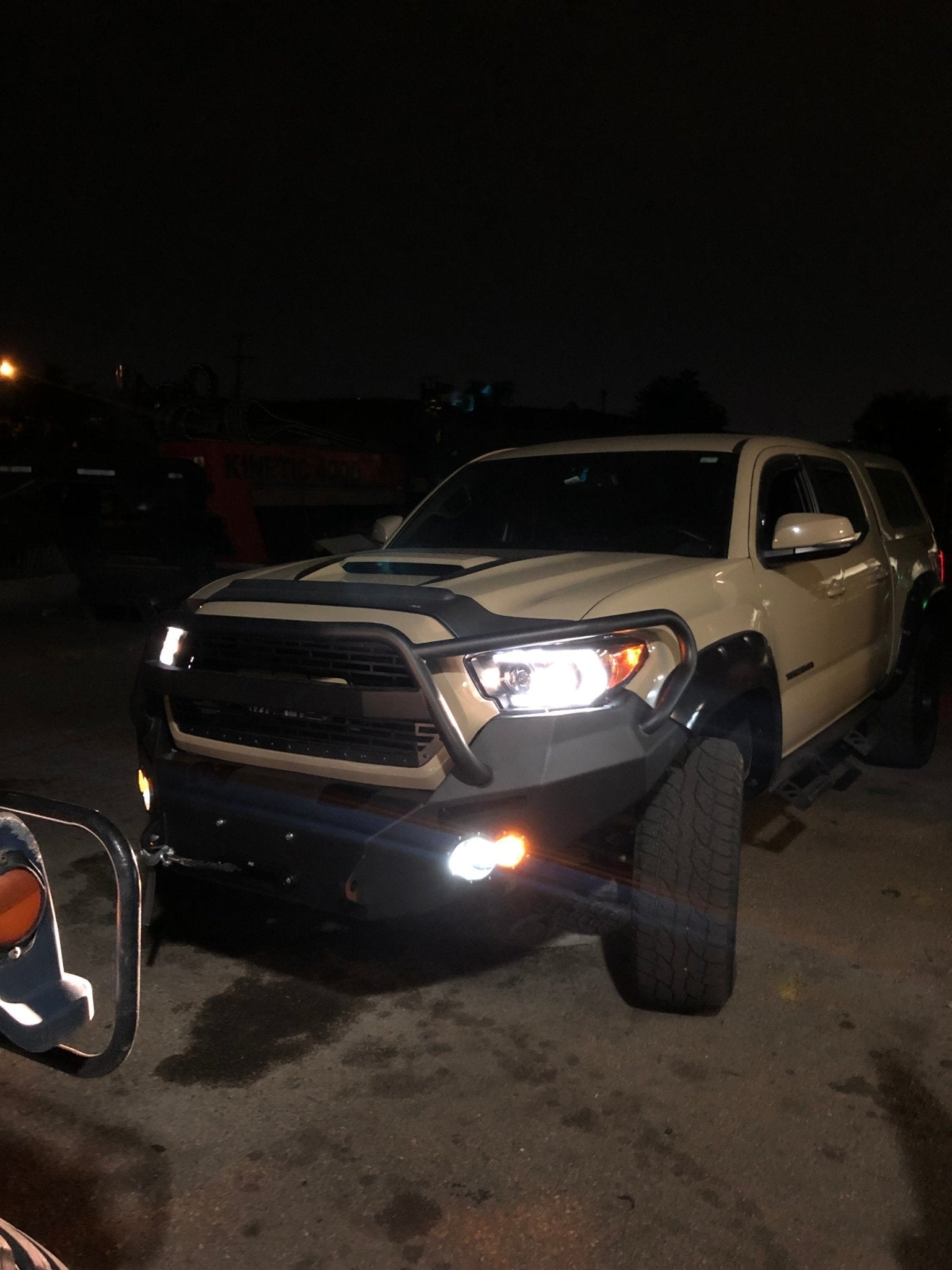
285/70R17 — called 33s, actually about 32.7 inches — wants a 2 inch level and minor plastic trimming, usually with no cab mount work if your offset is conservative.
35s need roughly 3 inches of lift, real trimming, and cab mount work. A chop suits up to about 33 inches; at 35s it clears on the street but the tire contacts under articulation, which is where a relocation is the better answer. Both are permanent.
Tire size is not what decides how much you cut into a 3rd-gen Tacoma. Wheel offset and how hard you flex it are.
That is the thing most fitment guides miss. Two trucks on identical 33s can end up one with a bit of liner trimming and one with cut-and-weld work at the cab mount, purely because of the wheels they bought and how they drive.
This covers the 2016–2023 Tacoma: what 33s take, what 35s take, and the honest difference between a cab mount chop and a cab mount relocation — because they are two different jobs and most guides only mention the weaker one.
Last verified July 2026.
Jump to: The tire ladder · What decides cab mount work · Chop vs relocation · Which one you need · Trimming & wheels · Alignment & underbody · 4th-gen note · FAQ
The tire ladder: 32s, 33s, 35s
| Tire | Suspension | Cutting | Cab mount |
|---|---|---|---|
|
275/70R17 ~32.2″ |
Stock | None | None. The community consensus for the largest tire that fits a stock 3rd gen with no modification. |
|
285/70R17 ~32.7″ — "33s" |
~2″ level | Minor liner / mud flap | Usually none — with conservative offset. Likely a chop with aggressive poke or real articulation. |
| 285/70R17 on a 3″ lift | ~3″ | Little to none | None in most setups |
| 35s | ~3″ | 2–3″ of fender flare and liner | Required. Chop or relocation — see below, they are not equivalent. |
Two details worth pinning down before you shop. A "33" on this truck is usually a 285/70R17, which measures about 32.7″ — not a true 33. And on a completely stock 3rd gen, that tire will rub at full steering lock, on both the fender liner and the cab mount. Stock trucks are 275 trucks.
What actually decides whether you cut the cab mount
Not the tire size on its own. Two things:
Wheel offset. Conservative offset tucks the tire in and keeps it away from the mount. Aggressive poke pushes it outboard and into everything. This is the single biggest lever you control, and it is decided the moment you buy wheels — before anyone has picked up a grinder.
How hard you actually wheel it. At rest and on pavement, a lot of setups clear fine. Under compression and articulation, the tire moves into space it does not occupy on the street. A truck that never flexes may never find the contact point a wheeled truck finds on its first trail.
So the honest version: 33s with conservative offset on a mild lift, driven mostly on pavement, generally need no cab mount work at all. The same tire on aggressive offset, or on a truck that gets flexed properly, moves into chop territory. Same tire, different answer.
Cab mount chop vs cab mount relocation
Both are permanent cut-and-weld work on the frame. They are not the same job and they do not buy the same clearance.
Cab mount chop (CMC)
The angled face of the stock mount is cut off and a cover plate welded back in at a flatter angle. You are removing material from the existing mount and closing it up again. Cheaper and faster, and for tires up to about 33″ — with at least 2.5″ of lift and roughly stock offset — genuinely enough.
Cab mount relocation (CMR)
The stock frame-mounted bracket is replaced entirely. The new bracket sits further back on the frame, with the mounting surface moved forward and higher than stock. More involved, and it buys considerably more room than even the most aggressive chop — enough that the cab tub itself becomes the next obstacle, which tells you how much of the obstruction the mount was.
The difference that matters at 35s
A chop will usually clear 35s on the street. Under articulation, the tire contacts the mount.
That is the whole distinction. If the truck lives on pavement with the occasional dirt road, a chop may be all you ever notice. The moment you flex it — which is why most people put 35s on a Tacoma — the chop runs out and the relocation does not.
| Chop | Relocation | |
|---|---|---|
| What happens | Angled face cut off, cover plate welded flatter | Bracket replaced; new one further back, forward and higher |
| Best for | Up to ~33″ | 33″ and larger |
| At 35″ | Clears on street; contacts under articulation | Proper clearance through the travel |
| Next obstacle after | Still the mount, at flex | The cab tub in the wheel well |
| Cost & complexity | Lower | Higher |
| Reversible | No | No |
Which one you need
- 33s, conservative offset, mild lift, mostly pavement: likely nothing. Buy the wheels right and you may never touch the mount.
- 33s, aggressive offset or real articulation: a chop. This is what the chop was designed for.
- 35s and you actually wheel it: relocation. The honest answer, and the one most guides skip because the chop is easier to sell.
- 35s, street truck, stance build: a chop works — go in knowing you will find its limit the first time you flex it properly.
- Undecided: relocation is the one that does not need revisiting. A chop now and a relocation later means paying to cut the same area twice.
Relocation kits are available for 2nd and 3rd-gen trucks (2005–2023) from several fabricators, so this is a supported job rather than one-off fabrication.
Whichever you choose, it is structural: clean cuts, a properly fitted bracket or plate, solid welds, and corrosion protection on the bare metal afterward. Done badly, you have compromised how the cab is supported.
Trimming and wheel fitment
At 33s expect minor plastic work — liner edges, sometimes the mud flaps. At 35s expect real trimming of the front fender flares and inner liners, often two to three inches, where the tire contacts at full lock and full compression.
Trimming and offset go together. The wrong offset pushes the tire into the flare or the upper control arm and forces more cutting than necessary — or creates rubbing the mount work and trimming were supposed to solve. Pick the wheel offset and the tire together, with the lift already decided.
We see plenty of trucks arrive with wheels already bought that complicate the fitment. Confirm the spec against your year, trim and intended tire before you order — it is the cheapest decision in the whole build and the one that determines the rest.
| Build element | What it does | Reversible? |
|---|---|---|
| Lift (2–3″) | Creates vertical room | Yes — bolt-on |
| Wheels & offset | Positions the tire — decides how much you cut | Yes — swap wheels |
| Fender / liner trim | Clears tire at full lock & compression | No — material removed |
| Cab mount chop or relocation | Clears the rear of the front tire | No — permanent |
| Alignment | Resets geometry | n/a — final step |
Alignment, and what bigger tires do to your underbody
After the lift and any cutting, the truck needs an alignment. Changing ride height changes suspension geometry, and the alignment is what keeps it tracking straight and stops it chewing through the new tires. See our Tacoma lift kit installation page.
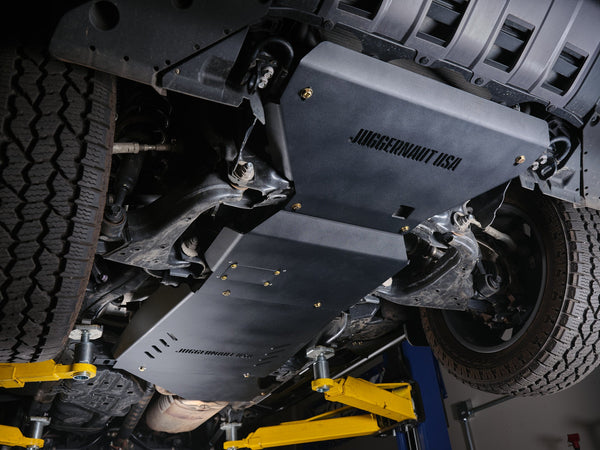
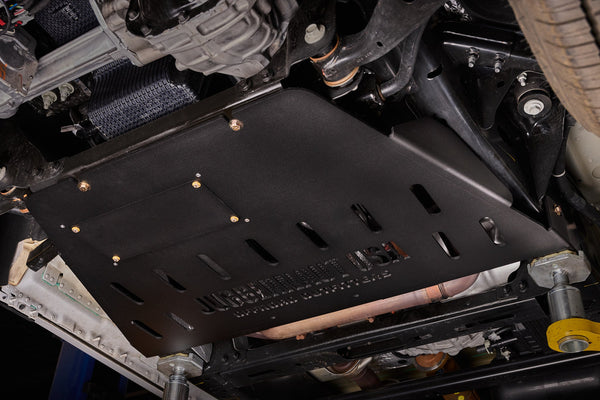
One thing that is easy to overlook: exposure. Once you have lifted a Tacoma and put bigger tires on it, you are going to use it — that is the point. The oil pan, transmission, transfer case and fuel tank take hits a stock truck never sees, and the factory TRD plate is front-only.
Armor for your Tacoma — check your generation first
4th gen (2024+): shipping now. 1/4″ 5052-H32 aluminum, bolt-on to factory points, powder-coated, lifetime warranty, cut in Wheat Ridge.
3rd gen (2016–2023) — this truck: in development. Our plates do not fit the 3rd gen yet, and we would rather say that than sell you the wrong generation. Get on the list with your year, trim and whether you have KDSS — that last one changes the fitment, and it tells us what to build first.
Detail on what each plate covers is in the Tacoma skid plate guide; if you are weighing metals, here is our honest aluminum vs steel comparison.
A note on the 4th-gen Tacoma (2024+)
Everything above is 3rd gen. The 4th gen is a different platform — different body geometry, different mounting points, different requirements. We are not going to hand you 3rd-gen numbers for a 4th-gen truck.
Our 4th-gen lift kit guide covers that platform, and unlike the 3rd gen your skid plates already exist.
FAQ
What is the biggest tire that fits a stock 3rd-gen Tacoma?
275/70R17, about 32.2″, with no modification. A 285/70R17 — what people call a 33 — measures about 32.7″ and will rub at full steering lock on a stock truck, on both the liner and the cab mount.
Do I need a cab mount chop for 33s?
Often not. With conservative wheel offset, a ~2″ level and mostly street use, 285/70R17 fits with minor plastic trimming and no cab mount work. Aggressive offset or real articulation is what pushes you into a chop — the tire size alone does not decide it.
How much lift do I need for 33s?
About 2 inches. On a 3″ lift they clear with little to nothing.
What do 35s need?
Roughly 3″ of lift, two to three inches of fender and liner trimming, the right offset, an alignment, and cab mount work — a relocation if you actually wheel the truck.
What is the difference between a cab mount chop and a relocation?
A chop cuts the angled face off the stock mount and welds a cover plate back at a flatter angle. A relocation replaces the bracket entirely, moving it further back with the mounting surface forward and higher. The relocation buys considerably more room.
Which do I need for 35s?
A relocation if you wheel it. A chop will generally clear 35s on the street, but the tire contacts the mount under articulation — exactly when you need the clearance.
Is either reversible?
No. Both are permanent, which is why it is worth doing the right one first — a chop now and a relocation later means paying to cut the same area twice.
Do I need new wheels?
For 35s, usually. For 33s it depends entirely on your current offset — and offset is what decides how much cutting you end up doing, so it is worth getting right before anything else.
Do you make skid plates for the 3rd gen?
Not yet — 4th gen (2024+) is shipping now and 3rd gen is in development. Join the waitlist above with your year, trim and whether you have KDSS and we will email you the day they ship.
Will my 2024+ Tacoma need the same work?
The 4th gen is a different platform and the specifics differ. Do not assume 3rd-gen requirements carry over.
Book your Tacoma build
Tell us your year, trim, the tires you are after and how you actually use the truck, and we will tell you honestly what it needs — including when the answer is "buy different wheels and cut nothing."
Mount work, trimming, lift, wheels and alignment in one place at our Wheat Ridge shop. Call or text (970) 341-4221, email sales@juggernautusa.com, or come by 4840 Van Gordon St Unit #300, Wheat Ridge, CO.
Shop tip Don't buy wheels and tires before the lift is decided. Backspacing and offset interact directly with how much you have to trim and chop. Lock in the lift and wheel spec together, then order the rubber — it saves you from rubbing problems or a second round of trimming.
A 35" build on a Tacoma involves permanent cut-and-weld work — there's no undoing a cab-mount chop. That's exactly the kind of job we do at our Wheat Ridge shop, documented and done clean. Call or text (970) 341-4221, email sales@juggernautusa.com, or stop by 4840 Van Gordon St Unit #300, Wheat Ridge, CO. Tell us your year, trim, and the tires you want and we'll spec the whole build.