Best 4th-Gen Toyota Tacoma Lift Kits (2024+): Every Kit, Ranked by Tier.
Every 2024+ Tacoma lift kit called out by name — spacer to long-travel — with our shop's pick per tier. Why the coil rear changes everything, which trims already ship with premium suspension, the UCA and diff-drop thresholds, and the i-FORCE MAX weight caveat.
The 2024+ Tacoma is a new platform, so 3rd-gen kits do not carry over — new frame, new geometry, and a coil-spring rear on some trims.
Budget leveling clears a modest tire bump. The mid tier is where most owners land. Premium coilovers only pay off if you actually drive fast in dirt.
Check your trim first: the Limited ships with electronically adjusted damping, which most conventional kits are not built to work with.
The 4th-gen Tacoma (2024+) is a different animal to lift than any Tacoma before it. Most trims moved to a modern multi-link coil rear, several now ship with genuine factory off-road suspension, and the i-FORCE MAX hybrid adds weight right where it changes spring rates. So the old 3rd-gen lift playbook — and most 3rd-gen parts — don't carry over. This is our shop's honest, no-fluff rundown of every 4th-gen lift kit worth knowing: called out by name, grouped by what you'll actually spend and how hard you actually wheel, with our pick in each tier.
We install these for a living on Colorado's Front Range, so where a kit rides great, wears parts, or needs supporting mods to work right, we'll say so.
Want it installed near Denver? See our Tacoma lift kit installation page, or call or text (970) 341-4221 for a quote on your truck.
Before you buy: what makes the 4th gen different
1. Most trims are coil rear now — but not all of them
Toyota moved most of the 4th-gen range from a leaf-sprung rear to a multi-link, coil-sprung rear. On those trucks, rear lift comes from coils or coil spacers plus correct-length shocks (and, at height, corrected links) — not add-a-leafs.
The lower trims kept leaf springs. That is not a footnote — it decides which kit you buy, and it is the single most common ordering mistake we see on this platform.
- Coil rear: SR5 Double Cab, TRD Sport, TRD Off-Road, Limited, TRD Pro, Trailhunter.
- Leaf rear: SR, SR5 XtraCab, TRD PreRunner and other work/base configurations.
Note the SR5 appears on both lists — it's cab-dependent. Double Cab SR5s got the coil rear; XtraCab SR5s kept leaves. Look under your own truck before you order. A coil kit on a leaf truck is a return, not an install.
2. Some trims already have real factory suspension
The TRD Pro ships with TRD-tuned FOX QS3 3-way adjustable internal-bypass 2.5″ shocks with rear remote reservoirs. The Trailhunter ships with factory Old Man Emu (ARB) 2.5″ monotube shocks and remote reservoirs, tuned roughly 3″ front / 2″ rear for load. If you own one of these, you already have a premium setup — “lifting” it means solving a specific need (more height, bigger tires, a different valving), not chasing a ride upgrade. Don't pay to downgrade.
3. The Limited has electronically adjusted shocks — check before you buy anything
This is the trim most likely to catch you out, and it's the one almost nobody mentions. The Limited ships with adaptive variable damping — the shocks change their damping on the fly based on drive mode and what the road is doing. That makes them electronically controlled rather than passive, and most conventional coilover and shock kits are not built to work with an electronically adjusted damper.
If that sounds familiar, it's the same trap as the F-150's CCD electronic suspension, where most brands explicitly exclude CCD-equipped trucks. On a Limited, “it fits a 4th-gen Tacoma” is not a good enough answer — confirm compatibility against your specific truck before you order.
4. The i-FORCE MAX hybrid weighs more
The hybrid carries a battery and noticeably more curb weight, which changes the spring rate you want — especially if you're also adding a bumper, winch, or drawers. Tell your installer up front if you're i-FORCE MAX so the rear rate is matched to the load, not guessed.
5. 3rd-gen (2016–2023) kits do not fit
Different platform, different geometry, and on most trims a coil rear. A 3rd-gen kit is not a 4th-gen kit, full stop. If you're on a 3rd gen, call or text us and we'll point you to the right kit for that truck.
How much lift — and what each height actually needs
Height isn't just the shock — past a point you have to correct the geometry or you'll wear tires, ball joints, and CV axles. The honest breakdown:
| Lift | Tire it clears | What it also needs |
|---|---|---|
| Stock | 33s on most trims | Nothing |
| Leveling (~1.5–2″) | 33s comfortably | Alignment |
| 2–2.5″ | 33s easy, 34s with trim | Alignment; UCAs sometimes |
| 2–3″ | 35s with minor trimming | Aftermarket UCAs + front diff-drop; check CV angles |
| 3″+ / long-travel | 35s+ | Full geometry correction, custom fab |
Rule of thumb: under about 2.5″ you can usually get away with just an alignment. At 3″ and up you almost always want aftermarket upper control arms (to restore ball-joint and alignment angles) plus a front differential drop (to keep CV-axle angles sane). Budget for those before you fall in love with a big number.
Tier 1 — Budget & leveling
Goal here is height and tire clearance for the least money. These range from a raw spacer (cheapest, worst ride) to a real value shock that genuinely improves the truck.
Spacer / preload leveling kits — Rough Country, ReadyLIFT SST

These lift by preloading the factory strut or stacking a spacer on top of it. Honest take: they get you height and tire clearance for the least money, but they do not improve ride quality, they add preload and steeper operating angles to a stock strut, and they can accelerate wear on front-end components. Fine for a mild look-level on a pavement daily; not what we'd put under a truck that actually sees dirt.
Westcott Designs

A preload/leveling approach done more thoughtfully — dialed for a specific ride height rather than max-cranked. A step up from a raw spacer if you want to stay in the leveling budget.
Bilstein B8 5100

The value pick. A real monotube shock — not a spacer — with a ride-height-adjustable (snap-ring) front giving up to ~2.5″ on the factory coil, plus matching rears. Meaningfully better ride and control than stock, at a budget-kit price.
Tier 2 — Bolt-on performance systems
This is where most people should land. Matched front coilover + rear shock systems that transform ride on-road and off, bolt in cleanly, and clear 33–34s. You feel this upgrade every single drive.
Bilstein 6112 / 5160

6112 adjustable front coilover + 5160 remote-reservoir rears. The ride-per-dollar benchmark — firm, controlled, unfussy, and it just works. Our most-recommended bolt-on for a do-everything Tacoma.
Peak Suspension Summit (2–2.25″)

A 4th-gen-specific system built around 2.5″ DSC coilovers and matched with tubular upper control arms, so you get corrected geometry in the box rather than as a later purchase. Newer name than the rest of this tier, and priced below where its spec sheet suggests it should sit.
Old Man Emu / ARB — Nitrocharger Plus & MT64
OME's bolt-on tiers. Nitrocharger Plus is the value option; MT64 is the newer monotube and the better of the two. Both let you spec the spring for the weight you actually carry, which is why OME does so well on loaded and overland trucks. Their top-end BP-51 sits a tier up — see below.
Dobinsons IMS
Fixed-valve monotube system, strong overland and touring value, and genuinely good with weight on board. A favorite of the load-it-up crowd who don't need adjustability. The adjustable MRR is a tier up.
Eibach Pro-Truck (Stage 1 / Stage 2)

Pro-Truck 2.0 adjustable front coilover + Pro-Truck Sport rears. A balanced street-plus-trail setup with a slightly more on-road-comfortable lean than the Bilstein.
Fox 2.0 Performance Series

IFP coilover front + rear. Fox's Baja-bred damping at a bolt-on price — a touch more off-road-biased in feel than the Bilstein.
Radflo
Up to roughly 2.5″ front and 2″ rear, and unusually customizable — Radflo will spec valving and spring rates to your truck's weight and use rather than selling one fixed tune. Less of a household name than Bilstein or Fox, which is exactly why it's worth knowing about: you get a tuned setup at a bolt-on price.
Tier 3 — Premium coilover systems
Remote-reservoir 2.5″ coilovers, tunable, rebuildable, with matched UCAs available. For people who wheel hard, run real weight, or simply want the best ride money buys on a Tacoma.
Bilstein 8112

Bilstein's top zone-valve coilover — excellent and understated, and in the same conversation as anything else in this tier.
King 2.5 OEM Performance

Hand-serviceable, plush yet composed, and rebuildable/re-valveable for life. The overland and desert favorite.
Old Man Emu BP-51

OME's flagship: user-adjustable internal-bypass with remote reservoirs, compression and rebound dialed independently. Near-coilover performance with OME's weight-rated spring options behind it — the pick if the truck is loaded and you still want to tune the ride.
Dobinsons MRR

Three-way adjustable remote-reservoir system covering roughly 1–3″. Dobinsons' step up from the IMS, and strong value at this level for a touring or overland truck that also sees speed.
Fox Factory Series 2.5 (Performance Elite)

Reservoir coilovers with an optional DSC adjuster. Superb high-speed control if you spend time in the dirt at speed.
ADS Racing Shocks
Race-derived dampers offered in 4th-gen kits from roughly 1.5–3″. ADS builds for desert racing first and street second, so the tune is firmer and more capable at speed than most bolt-on premium options. Rebuildable and re-valveable like King.
ICON Stage 2–4

2.5-series remote-reservoir coilovers sold as staged systems. Stage 2 adds tubular UCAs; higher stages add reservoir/bypass rears and a front differential drop with coilover lengths tuned to prevent CV bind (Stage 4). The staged approach makes it the easiest premium setup to get exactly right without picking parts yourself.
Tier 4 — Mid-travel
The tier most guides skip, and the one a lot of people actually want. Mid-travel sits between a bolt-on coilover and a full long-travel build: you keep the factory track width and most of the street manners, but move to longer-travel shocks and stronger upper arms for real wheel travel.
In practice it's a 2.5″ coilover — commonly King or ADS — paired with tubular upper control arms from a fabricator like Total Chaos, at roughly 2–3″ of lift. Compared with long-travel it does not widen the truck, does not need custom fabrication, and does not require one-off replacement parts down the line.
Who it's for: you've outgrown a bolt-on kit, you wheel hard or run dirt at speed, but you still daily the truck and don't want a fabricated pre-runner. If you've been reading about long-travel and hesitating over the cost and complexity, this is usually the honest answer.
Tier 5 — Long-travel & race
For dedicated high-speed desert and serious builds only. Long-travel replaces the control arms to add wheel travel and track width — it requires custom fabrication and alignment, widens the truck, often uses one-off parts, and trades away some street manners and payload simplicity. The main names are Total Chaos, Camburg (Kinetik) and Wicked Creations, whose 3.5″ kit runs about 14.5″ of travel.
Straight talk: the vast majority of Tacomas never need this. If you're asking whether you need long-travel, you don't — and mid-travel above is probably the tier you actually want. But if you're building a pre-runner or chase truck, this is the lane, and it's a build, not a bolt-on, so it starts with a conversation rather than a cart.

Wheels, tires and offset — the numbers
The lift gets the attention; the wheel decides whether it rubs. Start from what the truck came with.
Factory specs
| Spec | 2024+ Tacoma |
|---|---|
| Bolt pattern | 6×139.7mm (6×5.5″) |
| Lug thread | M14×1.5 |
| Hub bore | 95.1mm |
| Factory offset — TRD Off-Road | +55mm on a 7.5″ wheel |
| Factory offset — TRD Pro | around +45mm |
Two 4th-gen-specific traps in that table. The hub bore dropped from 106.1mm on the 3rd gen to 95.1mm, so 3rd-gen wheels will not sit hub-centric on this truck even where the bolt pattern matches. And the lug thread is M14×1.5 — check before you reuse a set of lug nuts.
Tire size by lift
| Suspension | Tire | Trimming |
|---|---|---|
| Stock, factory wheels | 285/70R17 (33″) on most trims | None |
| Leveling / ~2″ | 33″ comfortably | None to minor |
| 2–2.5″ | 34″ | Minor fender liner |
| 2–3″ | 315/70R17 (35″) | Minor trimming |
| 3″+ | 35″ with margin | Trimming, UCAs, offset matters |
Worth knowing: the 4th gen clears a 33″ tire on stock suspension and stock wheels, which the 3rd gen would not. If 33s are your goal, you may not need a lift at all — just tires. Going bigger? Our guide to fitting 35s on a Tacoma covers what it takes.
Offset — what to actually buy
| Offset | What it gives you | Best for |
|---|---|---|
| +25 to +35mm | Close to factory stance, no extra strain on bearings | Daily drivers. The safe default. |
| 0 to +15mm | More aggressive stance, tire sits further out | Pairs well with a leveling kit or mild lift |
| Negative (−12, −25mm) | Deep dish, wide stance | Not recommended on the 4th gen — see below |
The negative-offset warning is 4th-gen-specific and worth taking seriously. This truck is already wider than the 3rd gen, so negative offset that was normal on the old platform pushes the tire further out than it needs to go here. It loads the wheel bearings harder, throws more debris down the side of the truck, and buys you trimming you did not need. Owners running 35s at −10 offset have reported having to cut the front bumper to clear.
If you want an aggressive look, get it from 0 to +15mm rather than going negative. And remember offset is only half the story — backspacing decides how close the inner lip sits to the suspension and brakes, so verify both against your exact wheel before you buy.
Upper control arms: add them or not?
Aftermarket upper control arms (UCAs) are the most misunderstood line item on a Tacoma lift. Short version: a mild lift usually doesn't need them; a taller lift does — and forcing height without them is how you burn through tires, ball joints, and CV axles.
What a UCA actually does: when you lift the front, the factory arm swings to a steeper angle, which pulls your alignment (especially caster and camber) past what the stock arm can correct and can put the ball joint and CV axle at angles they don't like. A good aftermarket arm relocates the ball joint and hands you caster/camber back, so the truck tracks straight, wears tires evenly, and picks up a little clearance at full droop.
When you can skip them
Roughly 2.5″ of lift or less — a leveling kit or a mild bolt-on — and you can almost always get a clean alignment on the factory arms. Save the money.
When you should add them
- 3″ and up — plan on them; the alignment rack usually can't get you back to spec otherwise.
- Your alignment came back out of spec — if the shop can't dial in caster/camber, that's the tell.
- You're chasing 35s and max up-travel — arms (plus trimming) buy clearance and keep the geometry sane.
- You can feel it — a lifted truck that darts, wears one tire edge, or clunks over bumps is often begging for arms.
Uniball vs bushed is the next question: uniball arms are stronger and more precise (better for hard wheeling) but pass through more noise and want occasional service; bushed arms are quieter and maintenance-free (better for a daily driver). Several kits — ICON Stage 2+, the Peak Summit — bundle matched UCAs, which takes the guesswork out.
Our take: under 2.5″, skip them; at 3″+, budget for them from the start — adding them later means paying for a second alignment.
Front differential drop: what it is and when to run one
A front differential drop is a set of brackets that lowers the front diff — and the CV axles bolted to it — a small amount to bring your CV-axle angles back toward flat after a lift. It's cheap insurance against expensive CV wear.
The problem it solves: lift the front and the CV axles now run at a steeper “downhill” angle from the diff out to the wheel. Steep CV angles bind, vibrate, and chew through boots and joints over time — usually showing up as a vibration under acceleration or a clunk at full droop. Dropping the diff a touch re-flattens those angles.
When you need one
- Around 3″ of lift and up — this is where CV angles get steep enough to matter.
- You feel a driveline vibration or CV bind after a lift, or hear a clunk over big travel.
- You run a front locker or do a lot of flexy low-range wheeling, where CV-angle abuse is worse.
The trade-off is minor: you give up a small amount of clearance right at the diff (which already hangs low) and add a couple of brackets. On a lifted truck that's a fair trade to protect CV axles that cost far more than the brackets. Worth knowing: the better premium systems build this in — ICON's Stage 4, for one, pairs a front diff-drop with coilover lengths tuned to keep CV angles healthy.
Our take: at a mild level you don't need it; once you're near 3″ or feel any driveline vibration, run one — it's the cheapest CV-axle insurance there is.
The parts people forget (budget for these)
- Alignment — non-negotiable after any lift.
- Rear links / bump-stop spacers — on the coil rear, taller lifts want corrected link angles and bump-stop geometry.
- Re-gear — if you jump to 34–35s, especially on the hybrid, gearing keeps the truck driving right.
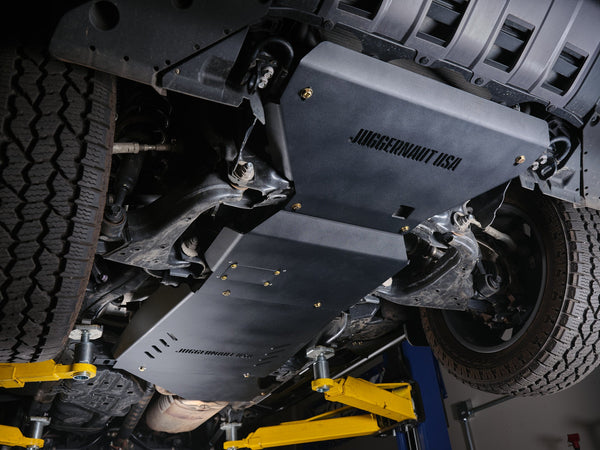
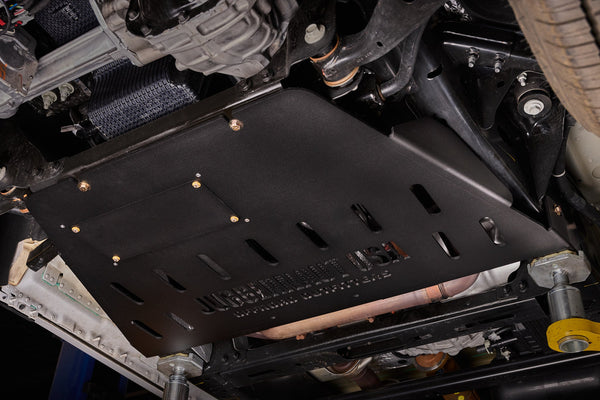
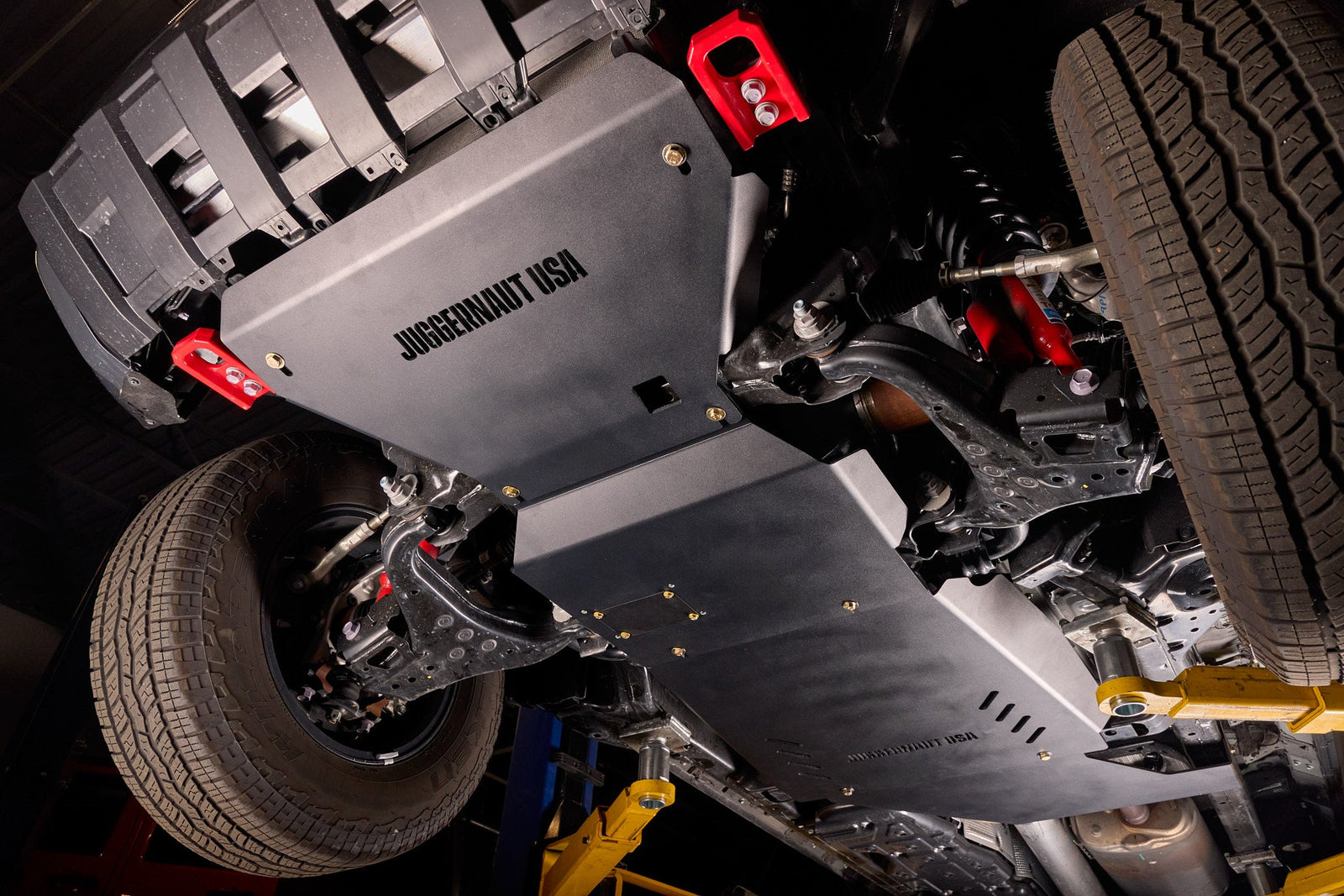
- Underbody armor — lifting exposes more of the underbody to rocks, and the 4th gen leaves the transmission, transfer case and fuel tank open behind the factory front plate.

2024–2026 Toyota Tacoma Full Skid Plate Package
Engine, transmission (with sway-bar disconnect coverage) and transfer case in 1/4″ 5052-H32 aluminum. Bolt-on to factory points, no drilling. Saves $229.90 over buying the three plates separately.
$1,249.95 Shop the package →
Full breakdown of what each plate covers is in our 4th-gen Tacoma skid plate guide; if you're weighing metals, here's our honest aluminum vs steel comparison. Every plate we cut for the truck is in the Toyota Tacoma skid plates collection.
What to buy, by how you actually use the truck
- Daily + looks + 33s: Bilstein 5100 — or nothing at all, since the 4th gen clears 33s stock.
- Do-everything (trails, dirt roads, some weight): Bilstein 6112/5160, or Peak Summit if you want UCAs included.
- Loaded / overland on a budget: Dobinsons IMS or OME MT64 — both handle weight well without going premium.
- Loaded / overland, no compromise: OME BP-51, Dobinsons MRR or King.
- Wheel hard / want the best ride: Bilstein 8112, King, Fox Factory 2.5, ADS or ICON.
- Outgrown bolt-on but still daily it: mid-travel — King or ADS with Total Chaos arms.
- You own a TRD Pro or Trailhunter: you already have premium suspension — only change it for a specific height, tire, or valving need.
- You own a Limited: check adaptive-damping compatibility first — that constraint narrows the list before budget does.
- You own an SR, SR5 XtraCab or PreRunner: confirm you have leaf springs, then buy a leaf-rear kit.
- Desert / high-speed build: long-travel (Total Chaos, Camburg, Wicked Creations).
Related guides: Fitting 35s on a Tacoma · 2026 Tacoma skid plates compared · Tacoma skid plates: TRD vs. aftermarket
FAQ
Does every 4th-gen Tacoma have a coil rear?
No. Most trims do — SR5 Double Cab, TRD Sport, TRD Off-Road, Limited, TRD Pro and Trailhunter. The lower and work-oriented trims kept leaf springs: SR, SR5 XtraCab and TRD PreRunner. Look under your own truck before ordering, because a coil kit will not fit a leaf truck.
What size tire fits a stock 4th-gen Tacoma?
Most trims clear a 285/70R17 (33″) on factory wheels with no lift and no trimming. That is a real change from the 3rd gen — if 33s are the goal, you may only need tires. Note that TRD Pro and Trailhunter start higher from the factory, so measure rather than assuming.
What wheel offset should I run?
+25 to +35mm is the safe default and closest to factory. 0 to +15mm gives a more aggressive stance and works well with a leveling kit. Avoid negative offset on this platform — the 4th gen is already wider than the 3rd, so negative offset pushes the tire out further than it needs to go and adds trimming and bearing load for no real gain.
Do I need upper control arms?
Under ~2.5″, usually not — an alignment covers it. At 3″ and up, plan on aftermarket UCAs to get your alignment and ball-joint angles back into spec.
I have a Limited — does that change my options?
Yes, and it's the trim most likely to catch you out. The Limited ships with adaptive variable damping, so the shocks are electronically controlled rather than passive, and most conventional kits aren't built for that — the same way most F-150 kits exclude CCD-equipped trucks. Confirm compatibility against your specific truck before ordering anything.
What is mid-travel, and do I need it?
Mid-travel is longer-travel shocks plus stronger upper arms at stock track width — more capability than a bolt-on kit, without the fabrication, width and one-off parts of long-travel. If you wheel hard but still daily the truck, it's usually the right answer.
Will a 3rd-gen (2016–2023) kit fit my 2024+?
No. The 4th gen is a different platform and parts don't interchange. Wheels don't carry over cleanly either — the hub bore changed from 106.1mm to 95.1mm.
Can I lift my TRD Pro or Trailhunter?
You can, but both come with genuine premium factory suspension (FOX QS3 and Old Man Emu, respectively). Usually it's only worth changing for a specific goal — more height, bigger tires, or different valving — not for a general ride upgrade.
Does the i-FORCE MAX hybrid need different springs?
It's heavier, so the correct rear spring rate matters more — especially with added weight. Any good installer will spec for it; make sure they know it's a hybrid.
What does it take to clear 35s?
Roughly 2–3″ of lift and a 315/70R17, with minor trimming. Past that, aftermarket UCAs and the right offset matter as much as the height. It's doable and looks great — just go in knowing it's more than a coilover.
What if I'm not near your shop?
We'll still give you a straight answer on what to buy — then find a reputable shop in your area to install it. A good install and alignment matter as much as the kit.
We install every kit above — and we'll tell you honestly which one fits your truck, your trim, and how you actually wheel. Call or text (970) 341-4221 or get a Tacoma lift quote.
We install these at our Wheat Ridge shop with a lifetime labor warranty — see Toyota Tacoma lift kit installation.
Check your trim before you buy The 4th gen moved most Double Cab trims to a coil-spring rear (SR5 Double Cab, TRD Sport, TRD Off-Road, Limited, TRD Pro, Trailhunter); the base SR, SR5 XtraCab, and TRD PreRunner keep leaf springs. Buy the kit that matches your rear — and know the TRD Pro and Trailhunter already ship with premium factory suspension (FOX QS3 / Old Man Emu). A 3rd-gen (2016–2023) kit will not fit.
New platform, new fitment traps. Tell us your year, trim, and whether you have the coil rear or disconnect, and we'll spec the right kit and install it, with the alignment arranged. (970) 341-4221 · sales@juggernautusa.com