Engine Splash Shield: Replace the Plastic, or Upgrade to Aluminum?.
Your engine splash shield is the plastic cover under the front of your vehicle — and it cracks, sags, and drags. What it does, whether you can drive without it, and when a truck or van owner should upgrade to a 1/4" aluminum skid plate instead of replacing plastic.
If the plastic panel under the front of your truck is cracked, dragging, or gone, you're looking at your engine splash shield — and you have two choices. Replace it with the same plastic, or, if you drive a truck, van, or SUV that sees more than pavement, upgrade the exposed area to aluminum armor that won't come back apart. This covers what the splash shield actually is, why it fails, whether it's safe to drive without one, and the honest line between “just replace it” and “upgrade it.”
Already know you want the upgrade? Browse truck skid plates or van skid plates, or jump to find your vehicle.
What is an engine splash shield?
The engine splash shield — also called the splash guard, under-engine cover, belly pan, or skid plate by people who don't know the difference — is the panel mounted under the front of most modern vehicles, directly beneath the engine and radiator. On the vast majority of trucks, vans, and cars it is molded plastic or a felt-like fiber composite, held on with a mix of plastic clips, push pins, and a few bolts.

It does three real jobs:
- Aerodynamics. It smooths airflow under the front of the vehicle, which is why automakers fit them — it measurably helps fuel economy at highway speed.
- Keeps water and road spray off the engine's belts, sensors, and electrical connectors.
- Blocks road debris — gravel, salt, and grime — from the underside of the engine.
What it is not is armor. It's a thin cover designed for pavement. It is not built to take an impact, and that's the source of nearly every problem owners have with it.
Why engine splash shields fail
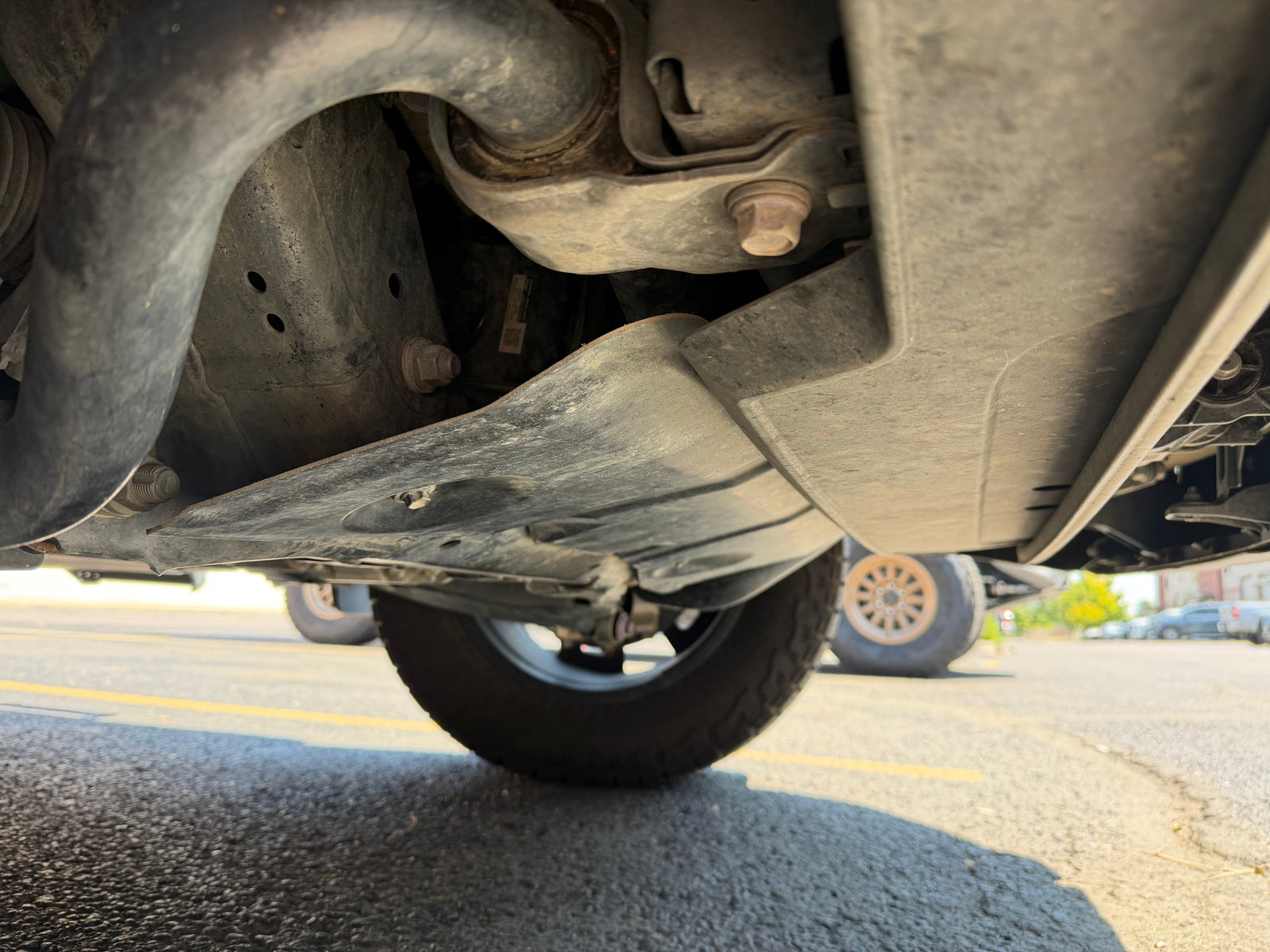
They fail because they're plastic (or felt), and because they hang low. The common failure path:
- The clips give out. Plastic push-pins and clips get brittle with heat cycling and age. Once a few let go, one corner drops.
- It starts to drag. A dropped corner scrapes the road, and now you hear that plastic flap-and-scrape sound at speed. Once it's dragging, it tears further every drive.
- A single impact ends it. A parking curb, a snow bank, a dirt road, or a piece of highway debris cracks or rips the panel. On a lifted truck or one that sees any off-pavement use, this is when.

None of that is a defect — it's what a plastic panel does over time. The question is what you replace it with.
Can you drive without an engine splash shield?
Yes, you can drive without it — but you shouldn't leave it off long, and here's the honest tradeoff. Nothing fails immediately. The engine will run fine. What you give up:
- A small mpg penalty from the lost aerodynamics — usually a fraction of a mile per gallon.
- More water, salt, and grime reaching belts, sensors, and connectors, which over time is what causes the expensive problems (a corroded connector or a soaked sensor down the road).
- A fully exposed underside — every rock and road hazard now reaches the oil pan and the front of the engine directly.

So: fine for a short trip to the shop, not fine as a permanent state. If you're going to cover that area back up, the real decision is with what.
Splash shield vs. skid plate — the distinction that matters
This is where most owners get steered wrong, because the words get used interchangeably and they are not the same part (here's what a skid plate actually is if you want the full definition):
| Engine splash shield | Skid plate | |
|---|---|---|
| Material | Molded plastic or felt (usually) | Steel or aluminum |
| Purpose | Aerodynamics + keep grime off | Take an impact and protect what's above it |
| Survives a rock strike | No | Yes |
| Replaces like-for-like | Cheap, but breaks again | Permanent |
A splash shield manages air and water. A skid plate stops damage. If your plastic shield keeps breaking because of where and how you drive, replacing it with more plastic just resets the clock.
The honest line: replace, or upgrade?
We make aluminum skid plates, so read this knowing that — but the honest answer depends on what you drive and how:
If you drive a sedan or crossover that lives on pavement: you can replace it with the factory-style plastic shield — it's inexpensive and it does its aerodynamic job. Just know it's the same part that failed the first time, so it may fail again down the road: the clips get brittle the same way, and the new panel hangs just as low as the old one did.
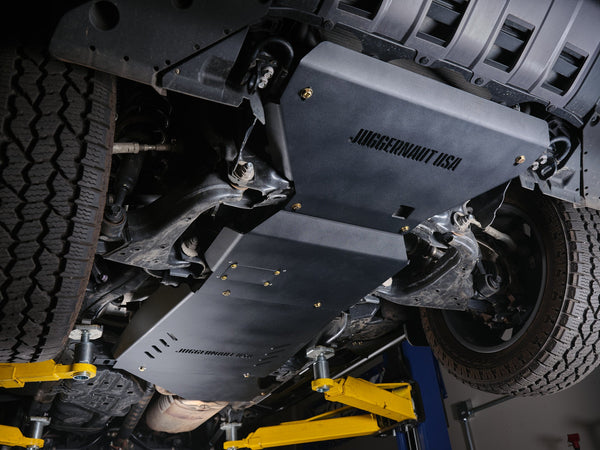
If you drive a truck, van, or SUV that sees gravel, trails, snow, job sites, or a lift: this is where replacing plastic with plastic is the wrong move. The reason your shield failed is the reason to upgrade — that area of your vehicle is taking hits a plastic panel was never meant to take. A 1/4″ aluminum skid plate covers the same area the splash shield did, and then some, and it doesn't come apart when it meets a rock. (Weighing steel instead? Here's our honest aluminum vs. steel comparison.)
That's the whole case. Not “aluminum is always better” — “aluminum is the right answer when your driving is why the plastic broke.”
What an aluminum upgrade actually covers
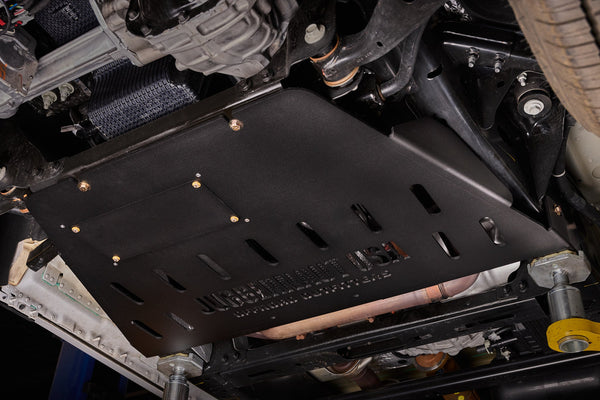
Our engine and transmission skid plates bolt to your vehicle's factory mounting points and cover the exposed front underbody — the oil pan and the front of the engine that the splash shield sat under, and on most platforms the transmission and catalytic converters behind it, which the factory plastic never protected at all. They're 1/4″ 5052-H32 aluminum, CNC-cut and press-brake folded in Colorado, powder-coated, with oil-drain and service cutouts so you're not pulling the plate to change your oil, and they're backed by our Limited Lifetime Manufacturer's Warranty.

Fitment is vehicle-specific — confirm your exact year, make, model, and trim on the product page before ordering.
Find your vehicle
We build skid plates for:
- Ford — F-150, Super Duty, Ranger, Expedition, Transit
- Lincoln — Navigator
- Toyota — Tacoma, 4Runner, Land Cruiser 250
- Chevy / GMC — Silverado & Sierra 1500, 2500/3500 HD, Colorado
- Vans — Ram ProMaster, Mercedes Sprinter
- Nissan — NV vans
Don't see yours? Email us — we add platforms regularly.
Related guides: What is a skid plate? · How much do skid plates cost? · F-150 skid plate guide · What is a cat shield?
FAQ
What is an engine splash shield made of?
On almost all vehicles it's molded plastic or a fiber composite — on the F-150 it's literally a felt-like fiber panel — held on with plastic clips and a few bolts. A handful of trims ship a thin stamped-metal version, but it's still a cover, not armor.
Is the engine splash shield the same as a skid plate?
No. The splash shield is a plastic cover for aerodynamics and keeping grime off the engine. A skid plate is a metal plate built to take an impact. Many vehicles have the plastic shield from the factory and no real skid plate at all — our skid plate explainer covers the difference in depth.
How much does it cost to replace an engine splash shield?
A plastic OEM or aftermarket replacement is relatively inexpensive; the cost climbs if the mounting points are damaged. An aluminum skid-plate upgrade costs more up front but is a one-time, permanent fix — here's what skid plates actually cost.
How long can I drive without an engine splash shield?
Indefinitely in the sense that the engine runs — but you lose a little fuel economy, expose belts and sensors to more water and grime, and leave the underside unprotected. Replace or upgrade it soon rather than leaving it off for months.
Why does my splash shield keep dragging or falling off?
The plastic clips have failed. Once a corner drops it drags and tears further. If this keeps happening, it's usually a sign of where you drive — the upgrade case.
Can I put a skid plate on instead of the plastic shield?
On a truck, van, or SUV, yes — that's exactly the upgrade this page is about. Confirm fitment for your vehicle on the product page.
Fitment varies by year, engine, and drivetrain. Always confirm your exact configuration on the product page before ordering — we check fitment free with every quote.
Find the 1/4" aluminum skid plates made for your exact truck or van — bolt-on, powder-coated, lifetime manufacturer's warranty.