What Is a Skid Plate? Definition, Materials, and Whether You Need One.
A skid plate is a rigid protective plate — usually aluminum, steel, or composite — mounted to the underside of a vehicle to shield low-hanging components from impact and abrasion. This reference guide covers what skid plates protect, the materials they're made from (with the actual engineering numbers), how factory shields differ from real armor, and an honest answer to whether your vehicle needs one.
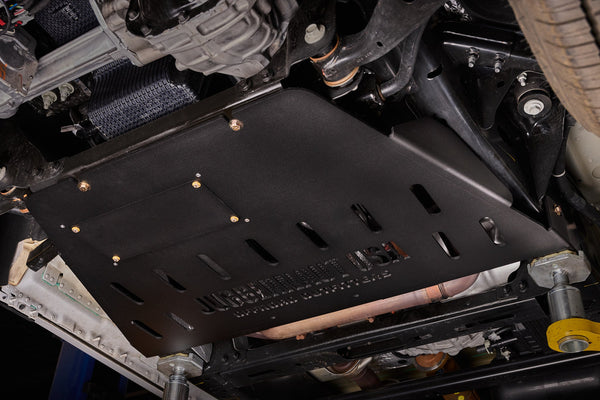
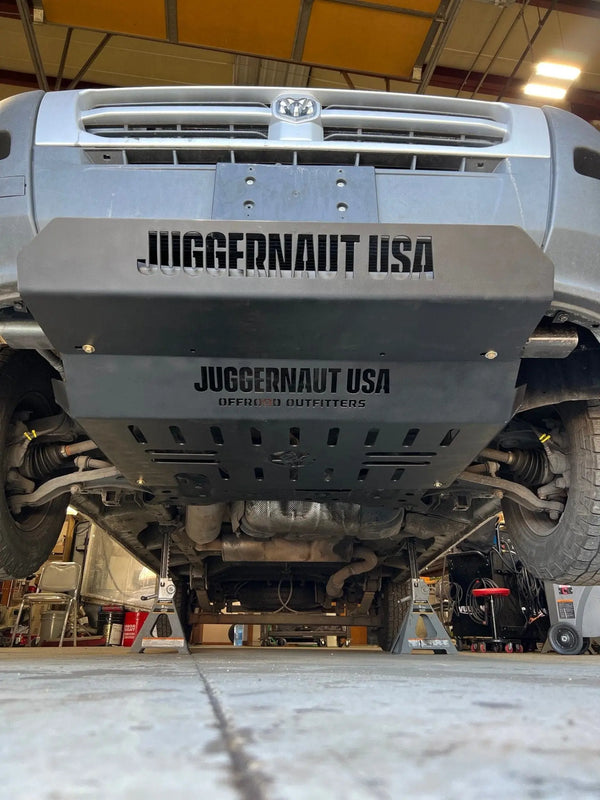
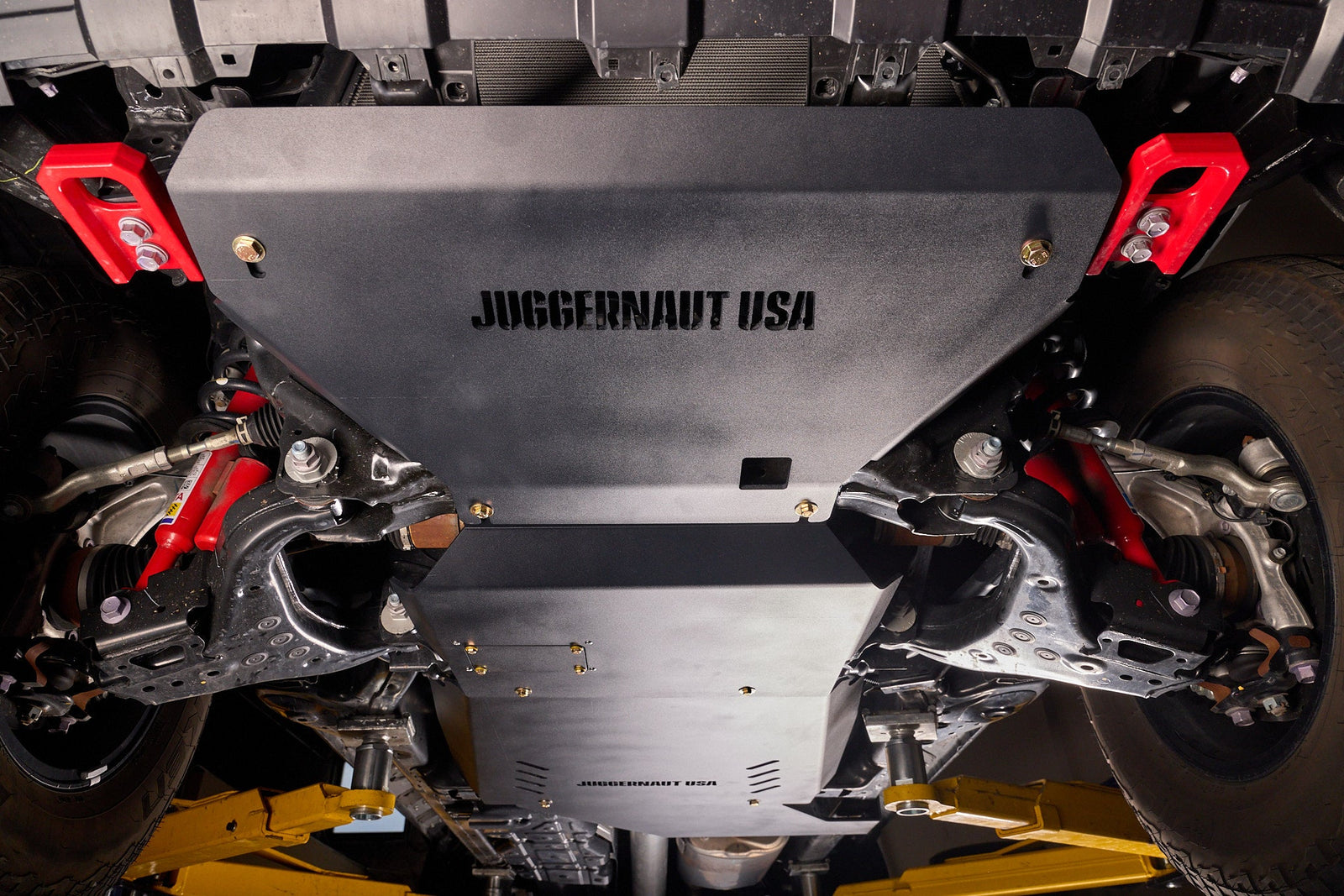
A skid plate is a rigid plate — aluminum, steel or composite — mounted under a vehicle to shield low-hanging components from impact and abrasion.
The parts worth protecting are the ones that strand you: oil pan, transmission, transfer case, fuel tank, and on many vehicles the catalytic converter.
Factory coverage varies more than people expect. Some manufacturers fit a real plate — Toyota's TRD front skid is roughly 1/4″ stamped aluminum. Others fit thin stamped shields, or plastic aero panelling that deflects road spray rather than absorbing an impact. Check what is actually under your own vehicle before deciding you need more.
Written by Matt Leonard, co-founder of Juggernaut USA · Last updated July 24, 2026
A skid plate is a rigid protective plate — typically aluminum, steel, or composite — mounted to the underside of a vehicle to shield low-hanging components such as the engine oil pan, transmission, transfer case, fuel tank, and catalytic converter from impact and abrasion. Skid plates bolt to the vehicle's frame or subframe and are designed to spread the force of a strike across the plate rather than let a rock, curb, or debris reach the component behind it. This guide is written as a reference: what skid plates protect, what they're made of (with the real engineering numbers, sourced), how they differ from the factory splash shields most vehicles ship with, and who actually needs one.
Jump to: What a skid plate protects · Skid plate vs. splash shield · Materials — the actual numbers · Design factors · Applications by vehicle type · Do you need one? · FAQ · Sources
What a skid plate protects
The vulnerable components on most trucks, SUVs, and vans, front to back:
- Engine oil pan — usually the lowest-hanging casting up front; a cracked pan causes immediate oil loss, and an engine run dry is a replacement engine.
- Transmission pan — thin stamped metal over an expensive assembly.
- Transfer case — on 4WD/AWD vehicles; typically an aluminum housing with little tolerance for direct impact.
- Fuel tank — large, low, and on most modern vehicles made of plastic; factory protection is usually a thin molded shield.
- Catalytic converters and exhaust — exposed to both impact and theft; per Carfax, replacing a stolen converter runs $1,000–$3,500. Shields for this purpose are covered in our catalytic converter protection guide.
- Electronic components — a growing category: sway bar disconnect actuators, hybrid-system hardware, and wiring increasingly live under modern trucks.

Skid plate vs. splash shield — they are not the same part
Most vehicles leave the factory with splash shields: thin panels of plastic, fiber composite, or light stamped steel whose job is deflecting water, mud, and road spray. They are not designed to absorb impact — they deform or tear on contact with anything solid. Ford's F-150 transmission shield, for example, is a felt-like composite panel famous among owners for sagging and dragging with age. A skid plate is structurally different: thicker plate metal, mounted to frame points, designed to take a strike and spread the load. Confusing the two is the most common mistake in the category — a vehicle "with underbody protection" from the factory usually has splash shields, sometimes one real front plate on off-road trims, and nothing structural behind it.

Materials — the actual numbers
Skid plates are made from three material families. The engineering constants below are from published materials data (sources linked):
| Material | Density | Yield strength | Corrosion behavior | Typical use |
|---|---|---|---|---|
| 5052-H32 aluminum (marine grade) | 2.68 g/cm³ (MatWeb) | ~193 MPa / 28 ksi (MatWeb) | Does not rust; high salt-corrosion resistance | Premium truck/van/overland plates, usually 3/16"–1/4" |
| Mild steel (e.g., A36 / P&O) | 7.85 g/cm³ (AZoM) | ~250 MPa / 36 ksi (AZoM) | Rusts where coating is breached; needs maintenance in salt climates | Rock-crawling armor, budget plates, usually 3/16" |
| Plastic / composite | ~0.9–1.5 g/cm³ (varies by resin) | Far below either metal | Immune to corrosion; degrades with UV and age | Factory splash shields, light-duty covers |

The weight and strength math, done properly
A commonly repeated claim is that "steel skid plates weigh twice as much as aluminum." The real relationship depends on thickness, because the two materials are rarely sold at the same gauge:
- At equal thickness, steel weighs about 2.9× more than aluminum (7.85 ÷ 2.68 g/cm³) — not 2×.
- As actually sold, the common market comparison is 3/16" steel vs. 1/4" aluminum. There, the steel plate weighs about 2.2× more than the thicker aluminum plate.
- Strength: a plate's resistance to permanent bending rises with the square of its thickness. Running the yield numbers above, a 1/4" 5052-H32 plate resists permanent deformation roughly 35–40% better than a 3/16" A36 steel plate — while weighing less than half as much.
- Steel's genuine advantage is surface hardness: it resists gouging and abrasion better when dragged repeatedly across rock, which is why dedicated rock-crawl armor is often steel despite the weight.
The full worked comparison, including stiffness, cost, and corrosion testing context (ASTM B117 salt spray), is in our aluminum vs. steel skid plates analysis.
Design factors
- Coverage. The largest real difference between products: a front-only plate versus a system covering engine, transmission, transfer case, and fuel tank. Factory off-road packages almost always protect the front only.
- Thickness. 3/16" (4.76 mm) is the market norm; 1/4" (6.35 mm) is the premium spec. Because bend resistance scales with thickness squared, the extra 1/16" matters more than it sounds.
- Mounting. Better designs bolt to existing frame points with no drilling; plates that hang from body panels or require modification transfer load poorly.
- Serviceability. Access ports for the oil drain and filter determine whether routine maintenance requires removing the armor.
- Weight vs. payload. A full steel system can exceed 120 lb; an equivalent-coverage aluminum system is roughly half that. On mid-size trucks and loaded vans, that difference comes straight out of payload.
- Finish. Bare steel rusts and bare aluminum oxidizes gray; powder coating protects both. Some manufacturers include it standard, many charge extra or ship bare.
- Modular vs. full-belly. Individual component plates can be added over time; full-length systems offer continuous coverage at higher cost and weight.

Applications by vehicle type
- 4WD trucks and SUVs — the core application: off-road impact protection for the drivetrain, and increasingly for low-mounted electronics (the 4th-gen Tacoma's electronic sway bar disconnect, for example — standard on TRD Pro and Trailhunter — hangs in the strike zone).
- Adventure vans and Class B RVs — Sprinter, ProMaster, and Transit builds carry low-hanging drivetrains plus RV-specific equipment; some Winnebago and Thor models mount a generator inches from the ground under the rear of the van.
- Anti-theft shields — bolt-over catalytic converter guards exist purely to make converter theft slow and loud; a specialized branch of the same product family.
- Motorcycles and powersports — dirt bikes, ATVs, and UTVs use small skid plates (often aluminum or HDPE plastic) to protect cases and linkages.
- Street vehicles — lowered cars sometimes run scrape plates, and some manufacturers fit decorative "skid plate" trim that is cosmetic rather than structural.

Do you actually need one?
Honestly, it depends on where the vehicle lives:
- Pavement-only driving: a lighter case, but not zero. Highways throw real debris — shredded semi-tire treads ("road gators"), dropped hardware, construction material — and at 75 mph you often can't avoid what the car ahead straddles. An engine/oil-pan plate is the difference between a loud bang and a breakdown lane. The other pavement consideration is catalytic converter theft, which is a parking risk rather than a driving risk — a cat shield addresses it directly.
- Gravel and maintained dirt roads: a front/engine plate is cheap insurance against the occasional rock and washboard debris.
- Trails, forest roads, overlanding: yes — this is what the product exists for. A single oil-pan strike costs more than a full system, and recovery from remote country costs more than that.
- Loaded vans and campers: yes, weighted toward whatever hangs lowest — which on RV conversions is often the generator or battery pack rather than the drivetrain.
Frequently asked questions
What is the plastic panel under my car — is that a skid plate?
No — that's a splash shield (sometimes called a belly pan or underbody cover). It deflects water and debris but provides no meaningful impact protection.
Do skid plates affect cooling or oil temperature?
Well-designed plates don't measurably affect street driving; most incorporate airflow gaps or venting. Sustained low-speed, high-load use (rock crawling in summer) is where design quality shows.
Do skid plates hurt fuel economy?
The weight effect is small — an aluminum system adds roughly 60–70 lb, similar to a passenger. Some flat-belly designs marginally improve underbody aerodynamics.
How much do skid plates cost?
Individual plates run roughly $300–$835 and full packages $910–$1,285. Professional installation adds about an hour of shop labor per plate section at whatever your local rate is. Full breakdown in our skid plate cost guide.
Are skid plates hard to install?
Most quality plates bolt to existing frame points with hand tools — typically 15–60 minutes of wrench time per plate for a home installer. Shops generally bill about an hour of labor per plate section, which covers rack time, prep, and torque checks beyond the wrench work itself.
About the source
This reference is maintained by Juggernaut USA, a skid plate manufacturer in Wheat Ridge, Colorado — we CNC plasma-cut, press-brake form, MIG weld, and powder coat 1/4" 5052-H32 aluminum skid plates for Ford, Chevy/GMC, and Toyota trucks plus Sprinter and ProMaster vans, and we run a 4x4 install shop at the same facility. That's the perspective behind this page; the numbers above carry their own sources so you can check them independently. Browse plates by vehicle or call/text (970) 341-4221 with fitment questions.
Sources
- MatWeb — Aluminum 5052-H32 material property datasheet (density, yield strength)
- AZoM — ASTM A36 mild steel properties (density, yield strength)
- ASTM B117 — Standard Practice for Operating Salt Spray (Fog) Apparatus (corrosion test standard)
- Carfax — catalytic converter theft replacement costs
- Toyota Newsroom — stabilizer disconnect mechanism (trim availability example)
- Weight and strength comparisons are calculated from the cited material constants; methodology in our aluminum vs. steel analysis. Page last updated July 2026; an archived copy is maintained at the Internet Archive.
Fitment varies by model year, wheelbase, and roof height. Always confirm your exact configuration before ordering — we check fitment free with every quote.
That depends on what you drive, where you park it, and what hangs lowest underneath. The material comparison covers the engineering behind the choice, and the cost guide covers what real coverage runs before you commit to anything.