Skid Plate
2010-2026 Mercedes Sprinter Catalytic Converter Guard & Shield
Lifetime Warranty
True Bolt-On Fit
5.0
(3)

Tall, parked outside, unattended overnight — the Sprinter is close to the worst-case profile for converter theft. What a guard covers, and why a van conversion raises the stakes.
A Sprinter is close to the worst-case profile for converter theft: tall enough to get under without a jack, parked outside because it does not fit in a garage, and often unattended for days. On a conversion the real cost is not the part — it is the tow, the wait for a component rural shops do not stock, and the trip you lose. Confirm NCV3 versus VS30 before ordering, and ask any manufacturer the one question that matters: does the plate cover the pipe on both sides of the converter, or just the body of it.
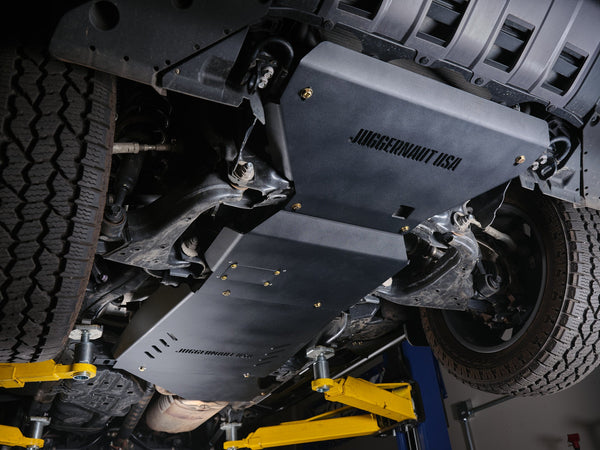
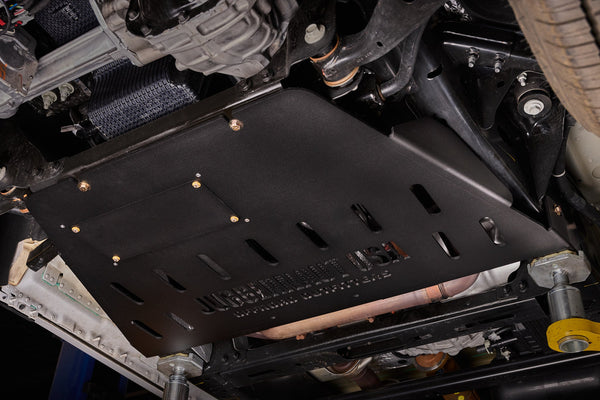
A Mercedes Sprinter catalytic converter guard is a 1/4" aluminum plate that bolts under the van and covers the converter along with the exhaust pipe on both sides of it, so a thief can't cut the part free and lift it out. On a Sprinter that matters more than on almost anything else on the road, because of one thing most cat-shield pages skip: where the van spends its nights.
Most vehicles that get their converter stolen at least live in a garage part of the time. Sprinters mostly don't. A work van sits in a fleet yard or on the street because it's too tall for a home garage. A camper Sprinter sits at a trailhead, a rest stop, or a street outside an Airbnb — sometimes with the owner asleep inside it. A contractor's van sits at the job site all day and the shop lot all night.
That's the single highest-risk pattern for converter theft: a tall vehicle, parked unattended, in the same predictable spot, night after night. The thief doesn't need a jack — a Sprinter already sits high enough to slide under. They don't need long — the converter comes off in the time it takes to walk to a coffee shop and back. And they don't need to worry about being seen, because nobody's watching a parked van at 3 a.m.
The cost isn't just the part. For a work van it's a check-engine light, a tow, and days the van can't earn. For a camper it can happen a thousand miles from your own mechanic. That's why so many Sprinter owners come to a guard the hard way — after it's already happened once.


Jump to: Why the Sprinter is the worst case · One guard fits every Sprinter · Covering the cut, not just the converter · Why 1/4" aluminum on a van · Getting it on the van · Theft part vs trail armor · Sprinter owner questions
Here's where a lot of cat shields make you work: they sell a different part for the 2WD van, another for the 4x4, one for the older generation and one for the newer — and order the wrong one and it doesn't line up. Ours isn't like that.
The Juggernaut Sprinter cat guard is one part that fits the 2010–2026 Sprinter — 2WD and 4x4, NCV3 and VS30. It's cut to mount around the converter, so there's no generation to look up and no drivetrain-specific version to get wrong. You order one guard and it fits your van. On a vehicle where the aftermarket usually makes you match a chassis code, that's one less thing to get wrong.
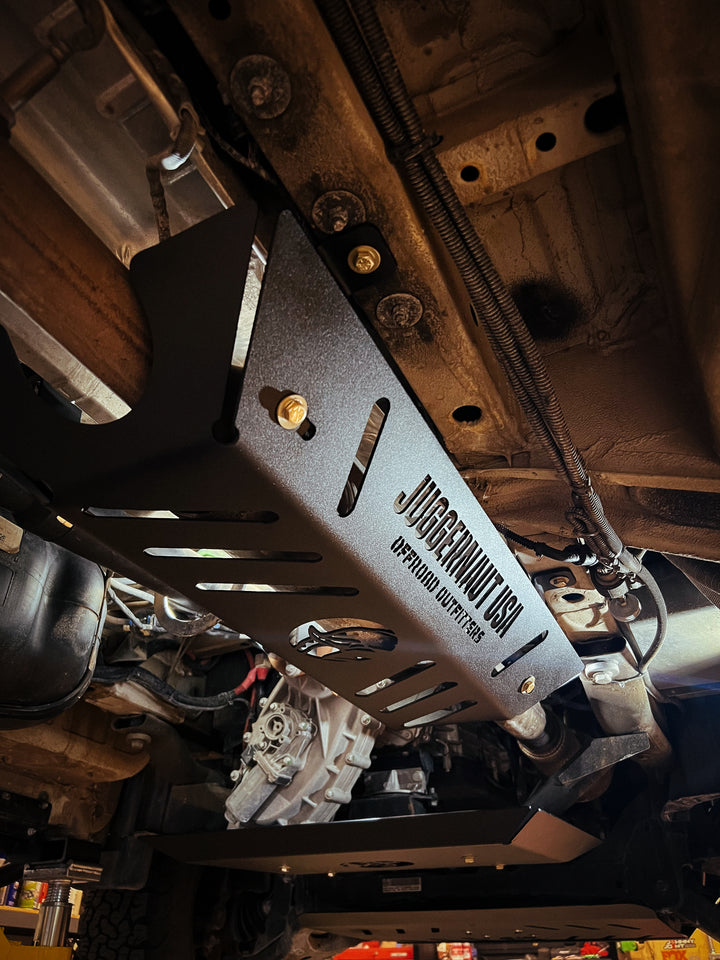
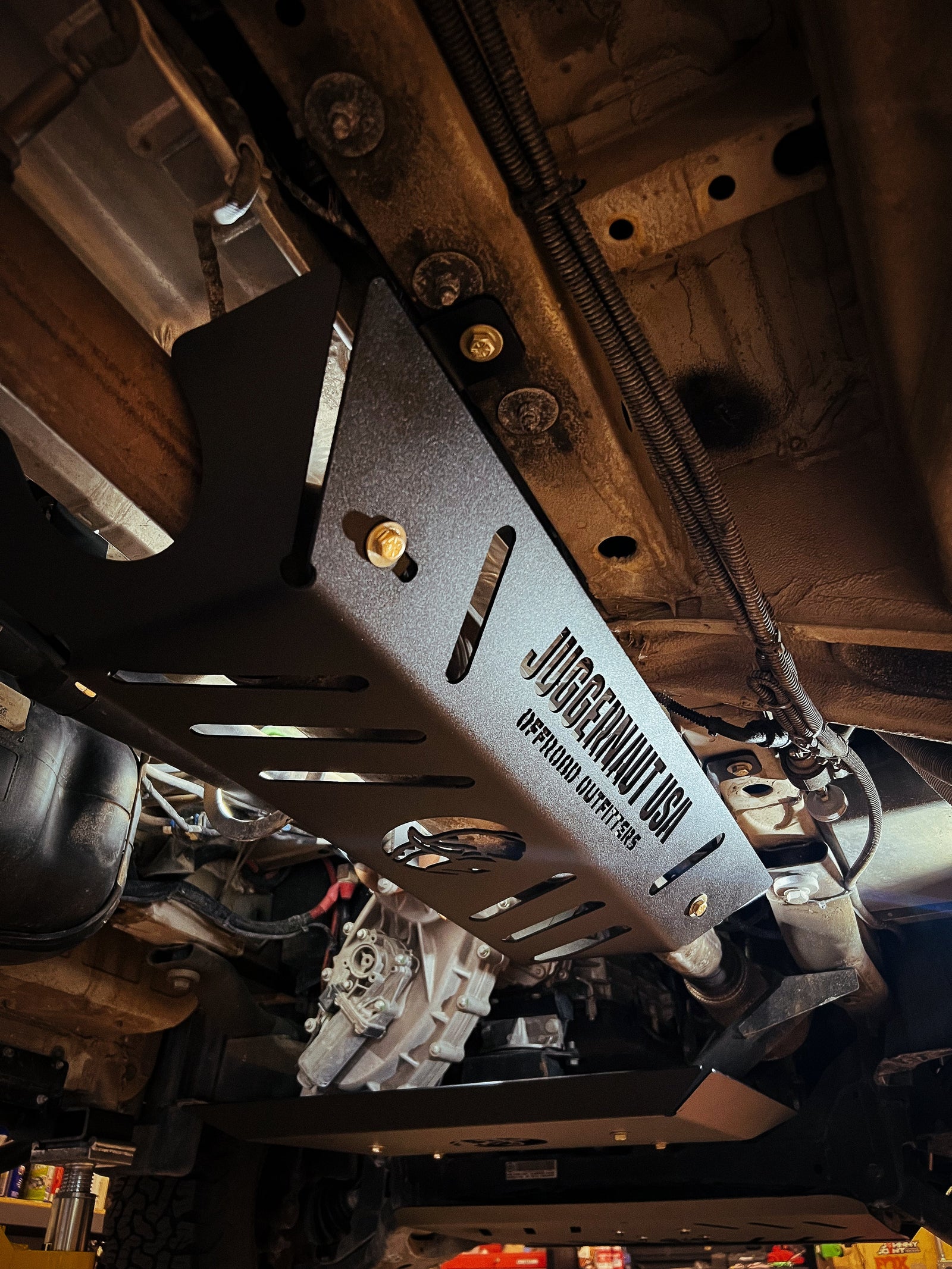
The plate anchors up into the van's own underbody with rivet nuts (rivnuts) rather than leaning on a factory bracket that may or may not be there. That means it grabs solid steel right around the converter and holds the coverage exactly where the cut would happen, instead of wherever an existing hole happened to land.
A converter isn't unbolted — it's cut out, by sawing the exhaust pipe on both sides of it. So the only thing that stops the theft is covering the pipe, not the converter body. This is the detail that separates a guard that works from one that just looks like protection.
Plenty of shields cap the bottom of the converter and leave the inlet and outlet pipe exposed. A saw still gets the part — it just takes a few more seconds. Our Sprinter guard covers the converter body and extends over the pipe on both ends, so there's no clean place to get a blade around. Take away the fast cut and you take away the whole reason a Sprinter got picked in the first place.
It also can't just be unbolted out of the way. The guard mounts with security hardware, so a thief can't spin the bolts out and lift the plate off to reach the converter underneath. Without the right bit it stays put — and the bit comes with the guard, so you can still pull it for exhaust service when you need to.

The material is what decides whether a shield delays a theft or ends it. Most "universal" cat shields are thin steel sheet or a wire cage — they add a step, but a determined thief with the right blade still gets through, and bare steel rusts sitting under a van through winters and road salt.
We cut our Sprinter guard from 1/4" 5052-H32 aluminum plate, the same material as our underbody skid plates. It's thick enough that it can't be quietly cut with a battery reciprocating saw the way an exhaust pipe can, it doesn't rust, and it's light — which matters on a van you're already loading down with gear, a build-out, or a payload. On a Sprinter every pound you add is a pound off what you can carry, so a heavy steel cage costs you twice. For the full material tradeoff, see our aluminum vs steel skid plates guide.

| On a Sprinter | Thin sheet / cage shield | Juggernaut 1/4" aluminum guard |
|---|---|---|
| Stops a quick saw cut | Slows it down | Built to stop the fast cut |
| Protects the pipe both sides | Often no — body only | Yes — converter and both pipe ends |
| Weight on an already-loaded van | Heavy steel adds up | Light aluminum, less payload lost |
| Holds up to road salt / winters | Bare steel corrodes | Aluminum doesn't rust; powder coated |
| Fits your Sprinter | Universal, needs adapting | One part fits 2010–2026, 2WD and 4x4 |
Our Sprinter cat shield is a bolt-on. It anchors to the van's underbody so the plate is held across the converter and pipe, and it's designed to go on without cutting into the vehicle. Because a Sprinter sits high, most owners can get under it at home with hand tools and a safe way to work underneath; a shop can put it on quickly on a lift.
Nothing about the guard interferes with the exhaust — it sits around the converter, not against it, and it comes back off with the included security bit if the van ever needs exhaust service. That last part matters on a work van you can't afford to have tied up. For a general walk-through, see cat shield installation: what's involved.
The one honest heads-up: it goes on with a rivet-nut tool, and getting the plate lined up to the mounting points takes a little patience the first time. Once it's snugged up it doesn't move — owners tell us it earns its keep as a rock guard on the rough stuff as much as a theft deterrent parked overnight.
A cat shield is a theft part. It protects the converter and pipe, and that's its job. It does not protect the engine oil pan, transmission, or the rest of the underbody from rocks and trail damage.
That distinction matters on a Sprinter specifically, because so many of them go where pavement ends — forest-service roads to a campsite, washboard, overlanding. If that's your van, you want underbody armor as well as a cat shield: two products, two different problems. Plenty of camper and adventure Sprinters run both — the skid plate for trail impacts, the cat shield for the nights parked at the trailhead. For full underbody protection, see our Mercedes Sprinter skid plate guide.

New to the category? Our hub what is a cat shield and our overview of catalytic converter theft protection cover the basics, and you can browse the full catalytic converter protection collection.
Does the guard fit a 4x4 Sprinter?
Yes — the same guard fits 2WD and 4x4 Sprinters. There's no separate 4x4 version to order; it mounts around the converter and fits both.
NCV3 or VS30 — which guard do I need?
The same one. It's a single part that fits the 2010–2026 Sprinter, so whether you've got an NCV3 or a VS30 it's the same guard — nothing to look up.
Will it fit a high-roof or extended-length van?
Yes. The guard mounts around the converter and exhaust, which don't change with roof height, body length, drivetrain, or generation — so every 2010–2026 Sprinter, from a standard 144" to a high-roof 170", takes the same part.
I run a fleet of Sprinters — can I protect all of them?
Yes, and fleets are one of the most common reasons owners buy these. Because it's one part for the whole 2010–2026 range, a mixed fleet — 2WD and 4x4, older and newer vans — all takes the same guard, so ordering for the whole yard is simple. Reach out and we'll sort the count.
Does it work on a camper or DIY van conversion?
The guard mounts to the factory underbody around the exhaust, which a conversion doesn't touch — build-outs happen above the floor. So a converted camper Sprinter takes the same guard as any other 2010–2026 Sprinter. The nights a camper spends parked at trailheads are exactly the case it's built for.
Can't a thief just unbolt the guard?
No — it mounts with security hardware, so without the right bit it can't be spun off. The converter ends up behind a plate a thief can neither cut through quickly nor unbolt, which is the whole point.
Why is the Sprinter hit so much more than a regular car?
It parks outside, it sits high enough to slide under without a jack, its converter carries valuable precious metals, and it's usually alone and unwatched overnight. That combination — reachable, valuable, unattended, predictable — is what thieves look for, and a Sprinter checks every box.
Does a guard actually stop theft, or just slow it down?
These thefts live or die on speed. A 1/4" aluminum guard covering the converter and the pipe on both sides removes the quick cut, so the thief gives up and moves to an easier target. It's built to defeat the smash-and-grab that Sprinters get hit with — not to be a bank vault.
Shop your plates below, or email sales@juggernautusa.com with your year and trim and we’ll spec it.
Free shipping, lower 48 · guaranteed fit or we cover return shipping · cut, welded and coated in Wheat Ridge, CO
Fitment varies by model year, wheelbase, and roof height. Always confirm your exact configuration before ordering — we check fitment free with every quote.
Our vehicle-specific Mercedes Sprinter cat shield bolts over the converter and the pipe on both sides, so the part can't be cut out.